

Building an Actionable Data Foundation
With freight procurement undergoing a major digital transformation as a result of the COVID-19 pandemic, data innovation is going to be a big priority for the freight procurement industry this year. But before shippers can undertake their desired data overhaul they need to make sure that they have the proper infrastructure in place-- something which is easier said than done. Here are a few tips that shippers need to make sure they have in place in order to build successful data operations. Shift to the Cloud Thanks to its scalability and flexibility, the cloud has become an indispensable tool for business intelligence today. Thus, if shippers are going to hit the ground running and adopt sophisticated tools, they have to break away from on-premise and adopt a cloud infrastructure that enables them to build the agile data analysis engine they need. Integrate AI The freight procurement space is becoming more real-time each day, especially since the freight market continues to move fast. And to be able to make the best decisions possible, shippers need access to actionable data in real-time. Enter AI. Through AI, businesses can gain access to the immediate insights they need and eliminate massive amounts of wasted time that is associated with manual analysis. Rethink Top-Level Strategy It’s not just about what technologies shippers adopt, but also about how decisions are made. Shippers are now able to get a 360-degree view of their truckload operations, so they must embrace a more comprehensive style of decision-making. Siloing off different departments such as transportation is harmful because it doesn’t allow companies to get a comprehensive sense of their overall strategy....
PROCUREMENT’S TECHNOLOGY REVAMP JOURNEY
The freight procurement industry has been notorious for its habit of being slow to adopt new technology. But with the COVID-19 pandemic upending things, those in freight procurement have taken a more progressive stance in terms of technological experimentation and adoption. But what is underpinning this “technology revolution” and what are some of the attitudes within the industry that will help shape the space in 2022? AI and Automation AI is completely changing the way shippers approach procurement. In fact, we recently uncovered that 97% of shippers said that automating a static freight procurement process has become a priority for their company, with nearly 70% specifying that it was a high priority. And if this mindset continues, don’t be surprised to see static freight tender processes-- that transportation teams have relied on for decades-- replaced with AI-driven automation technology that uncovers resilience, sustainability, and cost reduction opportunities for shippers. Real-Time Insights Even with this “technology revolution,” a surprising amount of companies still don’t have access to real-time data. 26% of shippers admit to not using it. Instead, they rely on market averages from DAT and Freightwaves, or historical data, to make important freight procurement decisions. As the world speeds up, shippers have become increasingly aware of the need to get real-time data if they are going to uncover better value and performance. Thus, sophisticated technology that uncovers actionable, real-time data and insights has gone from a “nice to have” to an “absolutely must-have.” Want more insights? Check out our 2022 State of Freight Procurement Report.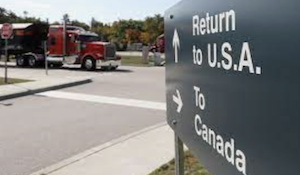
US-Canada Cross Border Vaccine Mandates
Less than 24 hours after reversing a vaccine mandate for Canadian truck drivers, due to pressure from the opposition and trucking lobbyists, the Canadian Prime Minister and Canadian Border Services Agency (CBSA) reinstated the mandate. In order to cross back from the U.S. into Canada, Canadian truck drivers need to be fully vaccinated or risk quarantine protocol. While American drivers who can not show proof of vaccination will be turned away at the border altogether. Although government resources have reported that nearly 90% of Canada's 120,000 drivers are vaccinated, many of these drivers have joined forces with unvaccinated colleagues to protest. Drivers, business owners, and trucking lobbyists have cited driver shortage, trade disruption and inflation as potential side effects. "Since Covid began, freight capacity has been a major problem on both sides of the border. And with 30,000 trucks crossing the border each day, carrying over $1 billion in trade, even a slight disruption to freight capacity can compound heightened supply chain problems for many manufacturers," said Dean Corbolotti, VP Managed Services at Sleek Technologies. "Unfortunately, unvaccinated drivers or those who don't want to deal with incremental protocol at the border will use their trucks on other routes and loads." With the mandate now in play, several U.S.-based manufacturers have reported massive shipment cost increases, some three times higher. Other manufacturers have reported shipment delays, some with 40 shipments waiting on available drivers. Unfortunately, freight procurement professionals will continue to struggle to move goods across the border and consequences will be seen farther up the supply chain.
Best Ways for Shippers to Manage Customer Relationships
What would freight management be without the relationships that shippers have with their customers? The last two years have underscored just how important maintaining customer relationships can be, as customers have had to scrutinize every dollar and the ROI they are receiving in a way they haven’t before. With that in mind, here are a few things shippers can do to best maintain their relationships with customers. Be trustworthy Trust is the most important aspect in any relationship, whether professional or personal. For shippers and customers, this means sharing as much information as they possibly can so that customers feel as if they have a reliable shipping partner – even if things become disrupted and delayed. Real-time transparency Tying into the idea of trust is the idea of transparency. From pricing to OTD, freight procurement has been plagued by transparency issues for decades. And as customers become more accustomed to real-time insights in other areas of their business, they are becoming less tolerant of delayed and vague transportation/ shipping reporting. Therefore, shippers need to adopt technology and processes whereby they can deliver clear feedback at a moment’s notice. Prioritize OTD Freight procurement in years past has become resigned to the fact that OTD mishaps will happen. But with the historic supply chain crunch, demand from customers for OTD success has reached a whole new level. Hitting OTD marks is just good business in freight procurement. And if you can’t do it, there is no shortage of alternate freight options for customers to pursue. Thus, shippers need to find innovative solutions to overcome capacity hurdles, while balancing cost with service. Otherwise, their customer relationships will likely suffer.
Sleek Unveils 2022 State of Freight Procurement Report
2021 was one of the most challenging for shippers yet, and set the stage for an equally hectic 2022. And with that, so many questions remain top-of-mind for shippers. For example: how has COVID impacted the space? What will technology adoption look like in 2022? And is the industry in a better place operationally than it was pre-pandemic? These are just a few of the questions we looked into as part of the 2022 State of Freight Procurement Report. Polling over 300 senior logistics decision-makers – from C-Suite to VP/Director levels – at shippers with over $100 million in annual freight spend, this year’s report dug into some of the key factors that are top-of-mind for the freight procurement industry – ranging from freight spend to technology adoption. Key findings include: Nearly All Shippers Will Increase Freight Procurement Budgets in 2022 According to the research, 97% of shippers say they plan to increase their freight procurement budgets in the wake of COVID with hopes of being able to better manage capacity, increase agility, bolster cost management and deliver better overall results. Furthermore, of all respondents, 52% are expected to increase their freight procurement budget by 25% or more year over year. Nearly All Shippers Invested in Freight Procurement Upgrades Since the Pandemic Began In addition to increasing freight spending in 2022, per the study’s finding, nearly all shippers (96%) have invested in new technology or strategies to help boost freight procurement performance as a result of COVID-19, with 95% saying their freight procurement operations have either “significantly improved” or “somewhat improved” since the start of the pandemic. Automation a High Priority Bolstering...
STUDY: 97 Percent of Shippers Set to Increase Freight Procurement Budgets In 2022
New research from Sleek Technologies details key trends in freight procurement following last year’s supply chain disruptions Chicago, IL – January 19, 2022 – Sleek Technologies, the leader in freight procurement automation, today announced the release of its 2022 State of Freight Procurement Research Report. The study – which polled 300 senior logistics decision-makers across the C-Suite, SVP and VP / Director levels at manufacturers, retailers or distribution centers with an annual freight spend of $100M+ – delved into the most pressing freight procurement issues, concerns and trends brought on by the COVID-19 pandemic that will remain top-of-mind in 2022. “COVID-19 has fundamentally changed the way the entire logistics industry operates – particularly when it comes to freight procurement,” said Mike Nervick, CEO and Co-Founder of Sleek Technologies. “From sky-high rejection rates and costs to navigating the increasingly murky spot market, the pandemic and supply chain crisis have been one of the most disruptive periods in the history of freight procurement. This research helps to illuminate the issues and trends that some of today’s biggest shippers are keeping in mind as we try to work through the pandemic in 2022.” Below is an overview of the study’s key findings: 97% of Shippers Plan to Increase Freight Procurement Budgets in 2022 According to the research, 97% of shippers say they plan to increase their freight procurement budgets in the wake of COVID with hopes of being able to better manage capacity, increase agility, bolster cost management and deliver better overall results. Furthermore, of all respondents, 52% are expected to increase their freight procurement budget by 25% or more. “These findings illustrate just how competitive...
3 Biggest Data Questions for Customer Teams
Customer relationships are so integral to the operations of freight procurement today, especially during such a highly competitive time like the COVID-19 era. And as the new year begins, now is the time for shippers to take a step back and assess their customer relationship operations and where improvements can possibly be made. Here are three questions shippers should ask in order to properly gauge their customer success operations for the year ahead. Are we losing accounts due to late deliveries (poor OTD)? Late deliveries and poor OTD can easily fracture a customer relationship, so constantly assessing OTD outcomes is a must. This feeds into a parallel question, which is do we have the insights we need to properly identify why OTD targets are not being met and what can be done to fix it? If the answer is no, then companies need to seriously consider swapping their current processes for an infrastructure that provides them with the oversight and data they need. Which customers cost too much to service? Balancing customer relationship costs with general financial success metrics can be tough. Therefore, shippers need to look closely at how much it costs to service each client and figure out ways to better optimize their relationship without sacrificing a quality experience. Granted, there will always be fluctuations, but forensic analysis of each customer can give shippers a better understanding of the marketplace and identify potential oddities and sticking points they have perhaps overlooked previously. Why do some customers cost more than others? On a related note, it’s important to look not just at which customers cost too much, but also the reasons...
Sleek Technologies and Novigo Partner to Provide Advanced Freight Procurement Tools
Sleek Technologies and Novigo will offer customers AI-powered freight procurement technology, 100% data transparency, and consulting to empower on-time delivery, at fair market prices. Chicago, IL – January 11, 2022 – Sleek Technologies, the leader in freight procurement automation, today announced its partnership with Novigo. Novigo is a global leading SAP TM supply chain consulting firm, which through the power of transformation has uncovered improvement opportunities within the supply chain to reduce risk while increasing visibility and agility. The collaboration between Sleek Technologies and Novigo will advance freight procurement, a core supply chain process, by replacing antiquated processes and massive data gaps with AI-powered automation technology and 100% data transparency. “We’re excited to collaborate with Novigo, global leaders in supply chain execution consulting,” said Mike Nervick, CEO of Sleek Technologies. “Our automation software and real-time executive dashboards fit perfectly into Novigo’s mission to power transformation and uncover improvement opportunities, especially cost reduction opportunities that mitigate double-digit rising truckload cost, within the supply chain.” Through Sleek Technologies Solutions Suite, customers have access to highly configurable intelligent freight procurement SaaS, called OTS, which uses AI to dynamically source compliant, asset-based carriers. Advanced freight procurement analytics, called TL360, provides four customizable executive dashboards that fill in data gaps so shippers can make informed, data-driven decisions to increase resilience, sustainability and provide cost reduction opportunities. “Novigo partnered with Sleek Technologies to offer customers intelligent automation technology and real-time, actionable freight procurement data,'' said Mahir Anwar, VP at Novigo. “With today’s supply chain challenges, process automation and complete truckload visibility, which provides actionable insights, will be key to mitigating rising truckload cost and late deliveries.” After a difficult 2021, many...